
Faith, Culture & Knowledge
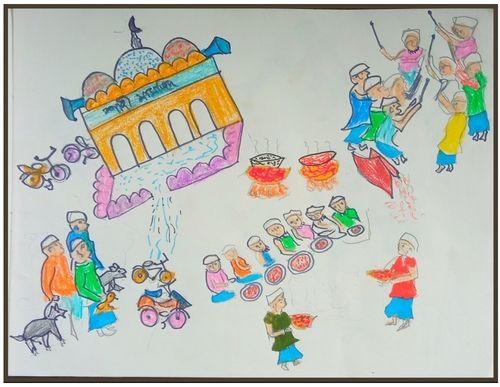
Much of computing assumes a secular, Western, scientifically rational user. For many people in the Global South, faith, tradition, and local knowledge shape how they make sense of information, technology, and the world.
We take these practices seriously as sources of design insight — studying religious media, rural visual and performative storytelling, and beliefs that sit outside scientific rationality — and build technologies that support interfaith and intercultural understanding.
Religion, Faith, and Technology
Religious values shape how people live, communicate, and care for the world around them. Religion and Sustainability (CSCW 2020) draws lessons for sustainable computing from Islamic religious communities, challenging persuasive design's narrow economic worldview. A nine-month ethnography of Islamic sermons shared online, Putting The Waz on the Social Media (CHI 2022), examines how digital sermons build an online religious counterpublic, while Situating Public Speaking (CSCW 2022) questions the idea of a universal set of public-speaking skills. During the pandemic, we also wrote about religious and parareligious responses to COVID-19 in rural Bangladesh.
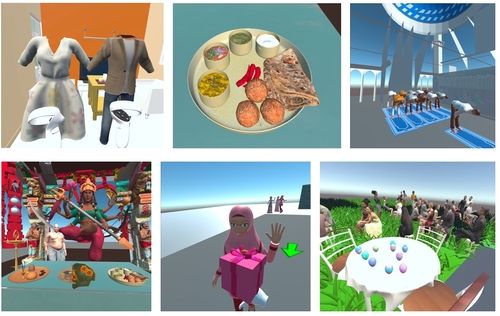
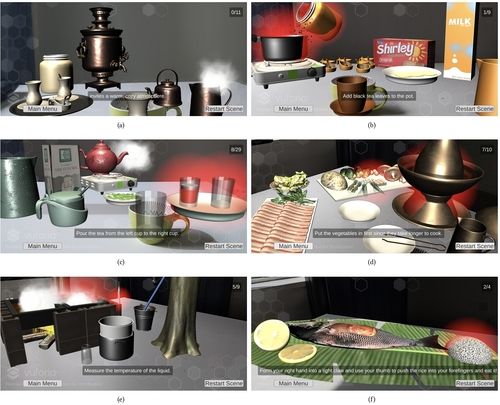
Because a lack of interfaith communication can breed prejudice and conflict, we designed Cohabitant (CHI 2024), a virtual reality application that promotes interfaith learning and empathy.
Related papers
- Religion and Sustainability: Lessons of Sustainable Computing from Islamic Religious CommunitiesCSCW 2020
- Putting The Waz on the Social Media: Infrastructuring Online Islamic Counterpublic through Digital Sermons in BangladeshCHI 2022
- Situating Public Speaking: The Politics and Poetics of the Digital Islamic Sermons in BangladeshCSCW 2022
- Fighting Coronavirus with Faith: Religious and Parareligious Responses to Covid-19 in Rural BangladeshACM Interactions 2021
- Cohabitant: The Design, Implementation, and Evaluation of a Virtual Reality Application for Interfaith Learning and Empathy BuildingCHI 2024
Local Ways of Seeing and Telling
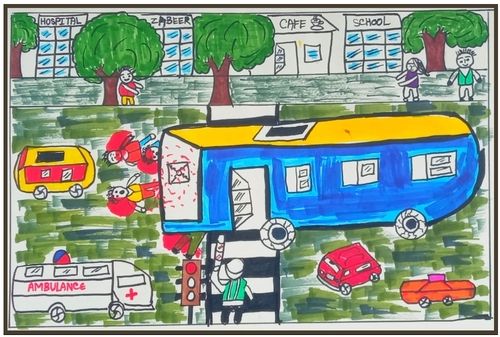
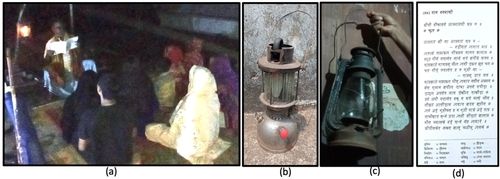
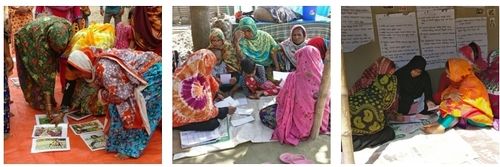
Data visualization rests on two centuries of conventions that may not reflect how many audiences convey information. Communicating Consequences (CHI 2023) contrasts rural traditional visual culture with contemporary data visualization, arguing that understanding traditional practices is needed to build richer, more accessible data narratives. Earlier, Seeing in Context (CSCW 2020) documented traditional visual communication practices in rural Bangladesh.
In a ten-month ethnography in three villages, Embodying Facts, Figures, and Faiths (CHI 2026) studied how communities use entertainment and cultural performance to tell serious stories with data. And Community Voice as Data (CHI 2023) explores how participatory videos can bring communities' own voices into international program development.
Related papers
- Seeing in Context: Traditional Visual Communication Practices in Rural BangladeshCSCW 2020
- Communicating Consequences: Visual Narratives, Abstraction, and Polysemy in Rural BangladeshCHI 2023
- Embodying Facts, Figures, and Faiths in Narrative Artistic Performances in Rural BangladeshCHI 2026
- Community Voice as Data: Affordances of Participatory Videos for International Program DevelopmentCHI 2023
Postcolonial Computing: Belief, Luck, and Memory
For many people, especially in the Global South, witchcraft, sorcery, and other occult practices are primary means of seeking health, wealth, and happiness. Building on an eight-month ethnography in six villages, Witchcraft and HCI (CHI 2019) brings these practices into conversation with postcolonial computing. Chasing Luck (CHI 2021) shows how villagers combine statistical probability, faith, hunch, and cultural norms in online betting, and Purdah, Amanah, and Gheebat (COMPASS 2021) shows how Islamic values shape notions of privacy.
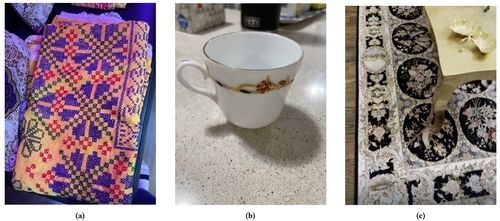
We also design for remembrance and cultural exchange. Politics of the Past (CHI 2024) studies how migrant families navigate history through memory and postmemory, and Be Our Guest (CHI 2023) is an augmented reality application that invites users into homes from different cultures to foster intercultural exchange.
Related papers
- Witchcraft and HCI: Morality, Modernity, and Postcolonial Computing in Rural BangladeshCHI 2019
- Chasing Luck: Use of Statistical Probability, Faith, Hunch, and Cultural Norms in Rural Betting PracticesCHI 2021
- Purdah, Amanah, and Gheebat: Understanding Privacy in Bangladeshi “pious” Muslim CommunitiesCOMPASS 2021
- Politics of the Past: Understanding the Role of Memory, Postmemory, and Remembrance in Navigating the History of Migrant FamiliesCHI 2024
- Be Our Guest: Intercultural Heritage Exchange through Augmented Reality (AR)CHI 2023