
Migration & Diaspora

Digital infrastructures now shape almost every part of migration, from sending money home to proving who you are in a new country. We study how immigrants, refugees, and diasporas from the Global South navigate these systems, and design with them for fairer alternatives.
Our work looks at the politics as well as the practicalities: how diasporas organize for change at home, how borders reappear inside data systems, and how communities build informal networks of trust when formal systems fail them.
Diasporas and Transnational Politics
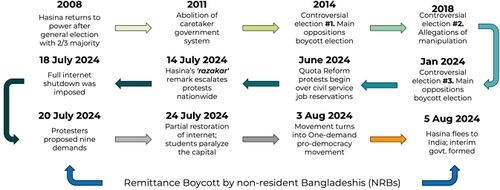
During Bangladesh's 2024 quota-reform movement, non-resident Bangladeshis used social platforms and remittance flows to challenge state authority. How do the Global South Diasporas Mobilize for Transnational Political Change? (CHI 2026, Best Paper Honorable Mention) traces the phases of their collective action — from technology-mediated engagement and rapid network building to a strategic remittance boycott and adaptive responses to surveillance and information blackouts — and introduces the idea of "diasporic superposition". A companion study documents how the ten-day nationwide internet shutdown during the movement affected the rights of Bangladeshis living abroad (Internet Disconnection as a Risk to Cross-Border Human Rights).
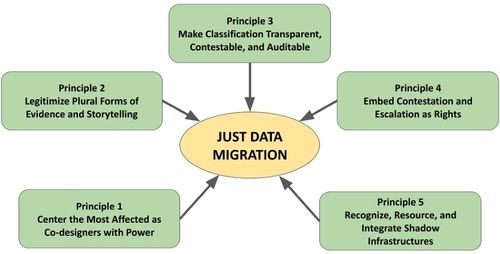
Borders also persist inside data systems. Drawing on interviews with 32 immigrants in Canada, Data Migration in HCI (CHI 2026) shows how credit bureaus, credential evaluators, healthcare databases, and immigration portals gatekeep immigrants' civic rights, and how community-mediated informal networks help people make their data legitimate in a new country. Related work examines AI in immigration decision-making through Canadian parliamentary discourse and how information retrieval systems construct and amplify immigration narratives.
Related papers
- How do the Global South Diasporas Mobilize for Transnational Political Change?CHI 2026
- Data Migration in HCI: The Politics of Invisible Borders, Informal Networks, and Immigrants' DataCHI 2026
- Internet Disconnection as a Risk to Cross-Border Human RightsCHI 2025 (LBW)
- How Information Retrieval Systems Construct and Amplify Immigration NarrativesECIR 2026
- Partisan Perspectives on AI and Immigration: An Analysis of Canadian Parliamentary Discourse (2014–2024)Canadian Ethnic Studies, Volume 57, Number 3, 2025
Infrastructures of Support for Immigrants
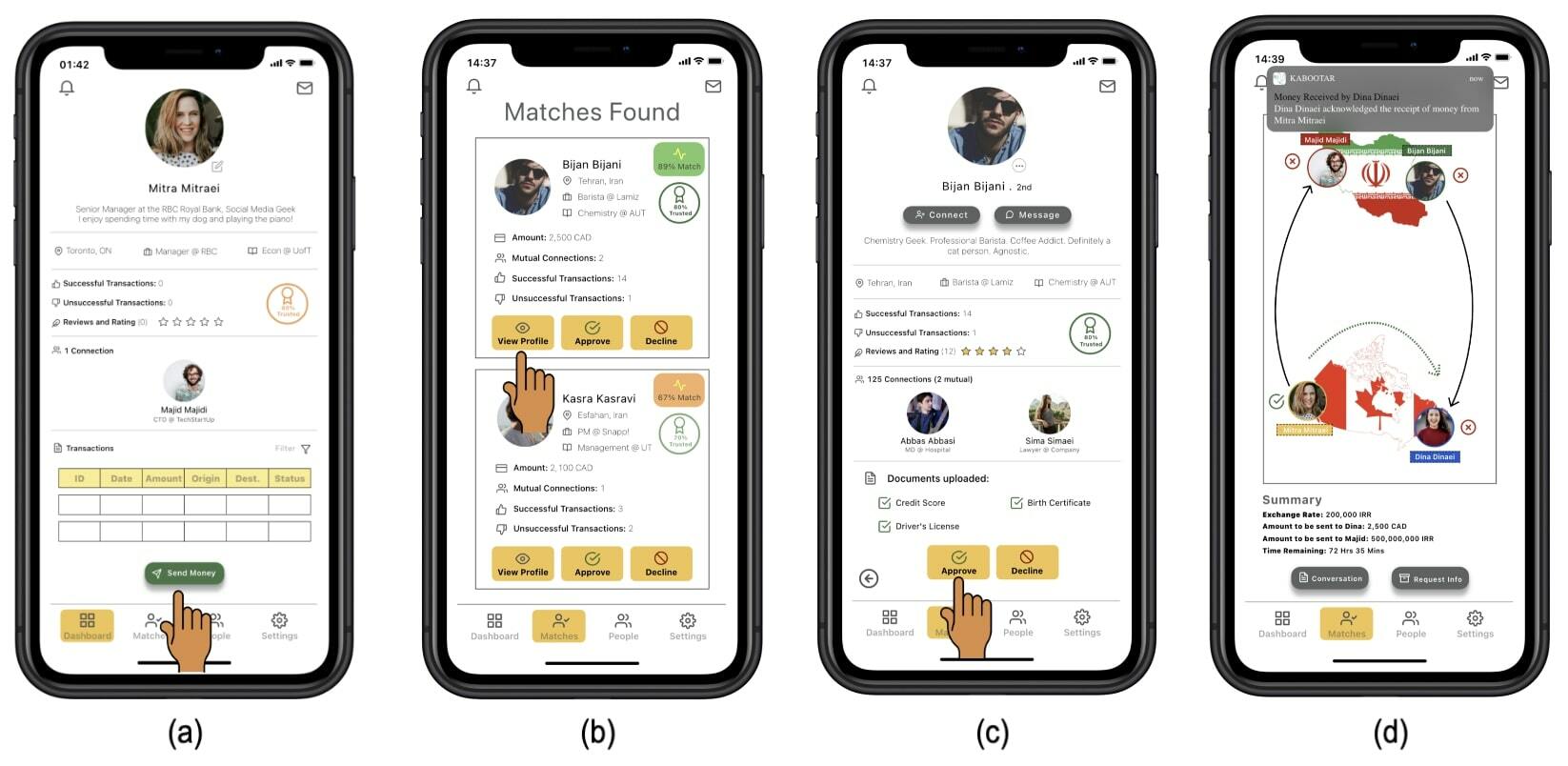
When global politics cut communities off from formal financial platforms, people build their own infrastructures. Our three-month ethnography with the Iranian community in Toronto, Money Whispers (CHI 2021), documented the financial loss, fear, uncertainty, and privacy breaches involved in sending money home, and the informal workarounds that make it possible. With the community, we then co-designed Kabootar (CSCW 2022), a community-based FinTech application that matches senders and receivers of money across borders.
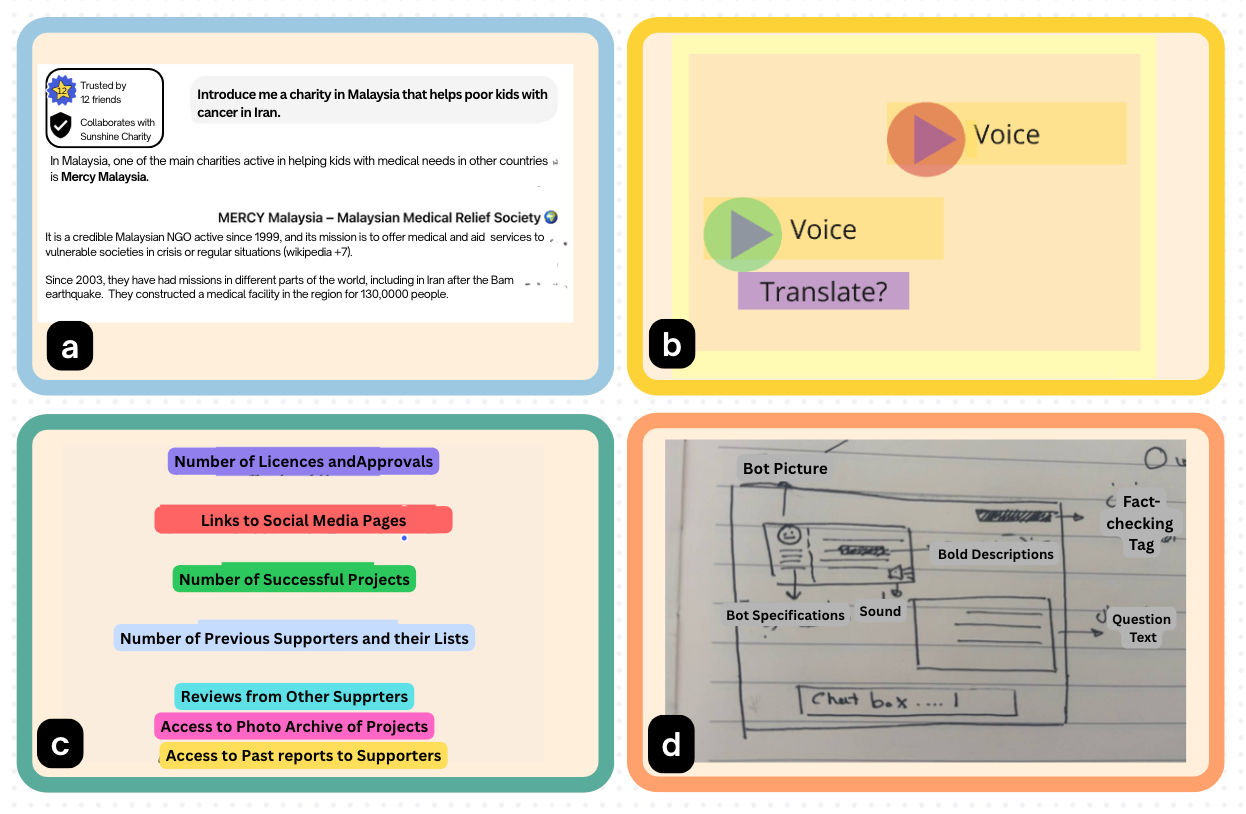
More recently, we have studied Iranian immigrant nonprofits. Artificial Intelligence at the Margins (DIS 2026, Best Paper Honorable Mention) shows how legitimacy barriers, capacity gaps, and ethical dilemmas create a cycle of infrastructural immobility — one that generative AI risks deepening. Working with practitioners, we designed AMINA (GROUP 2027), an inclusive and accountable AI assistant for immigrant nonprofits. We also follow immigrants' emotional and informational trajectories in Reddit communities over time.
Related papers
- Artificial Intelligence at the Margins: Risks and Opportunities for Iranian Immigrant Nonprofits in the Global NorthDIS 2026
- AMINA: The Inclusive and Accountable AI for Marginalized Immigrant Nonprofit AssistanceGROUP 2027
- "Kabootar": Towards Informal, Trustworthy, and Community-Based FinTech for Marginalized ImmigrantsCSCW 2022
- Money Whispers: Informality, International Politics, and Immigration in Transnational FinanceCHI 2021
- Emotional and Informational Trajectories of Immigrants: A Longitudinal Study of Reddit CommunitiesICWSM 2027
Refugees, Displacement, and Memory
Research on refugees often stops at immediate needs. Our two-year ethnography with Rohingya refugees in Bangladesh, Infrastructuring Hope (ICTD 2020), looks instead at solidarity, leadership, negotiation, and the hopes that shape long-term settlement. We have also studied the everyday lives and ICT use of internally displaced people in northern Iraq (Exile Within Borders), and how humanitarian workers supported refugees and asylum seekers in Turkey at a distance during COVID-19 (A Matter of Time).
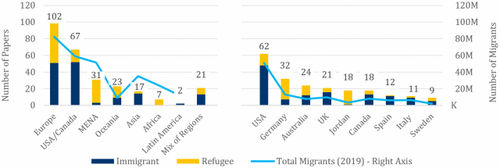
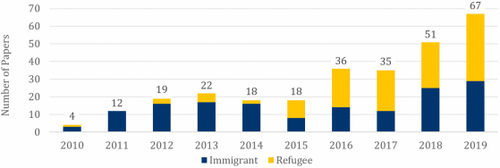
Migration is also about memory and identity. Memory through Design (CHI 2020, Best Paper Honorable Mention) introduced a paper-based drafting tool through which newcomers express the cultural values of their homes. Stepping back, A Decade of International Migration Research in HCI (ToCHI 2022) surveys 282 publications and interviews 11 researchers to chart how the field has evolved and where it should go next.
Related papers
- Infrastructuring Hope: Solidarity, Leadership, Negotiation, and ICT among the Rohingya Refugees in BangladeshICTD 2020
- A Matter of Time: Anticipation Work and Digital Temporalities in Refugee Humanitarian Assistance in TurkeyCSCW 2023
- Exile Within Borders: Understanding the Limits of the Internally Displaced People (IDPs) in IraqLIMITS 2019
- Memory through Design: Supporting Cultural Identity for Immigrants through a Paper-Based Home Drafting ToolCHI 2020
- A Decade of International Migration Research in HCI: Overview, Challenges, Ethics, Impact, and Future DirectionsACM Transactions on Computer-Human Interaction (ToCHI) 2022